|
St. Ann's Square
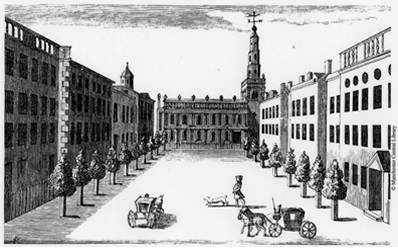
As you can see on the map below, in the corner formed by Deans Gate (1) and Market Street (2) there was a field (4) called Acres Field where an annual fair was held from the 13th Century until 1823. It was here that St. Ann's Square was created. When the square was set out, it was as a tree lined residential area. 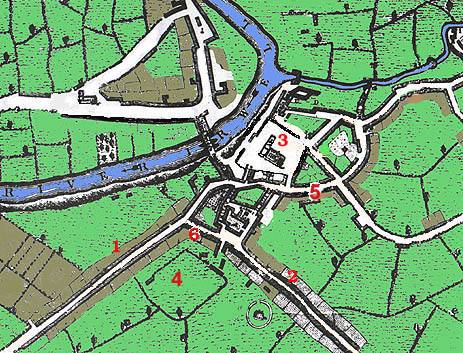 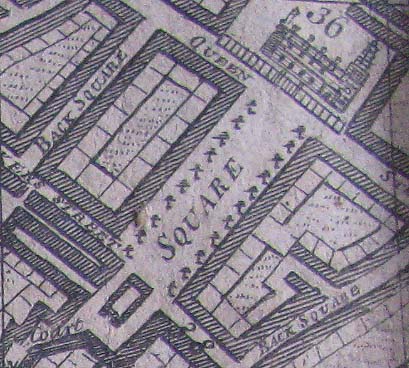 The images above
and below are extracts from the Casson and Berry
map of Manchester & Salford drawn between 1741
and 1757. They are shown here with the
permission of Chetham's Library.
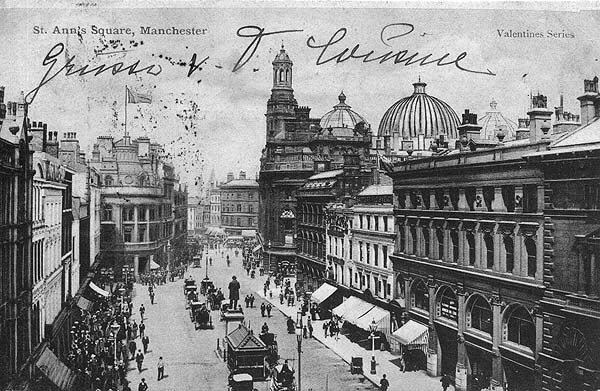
 Below you see
the square circa 1904. The Royal
Exchange building with its 3 huge glass domes
is in one of its early forms before the major
redevelopment that occured in 1921.
Beyond you can get a glimpse of Market Square
with the awnings of the shops, that lined the
market, in full view.
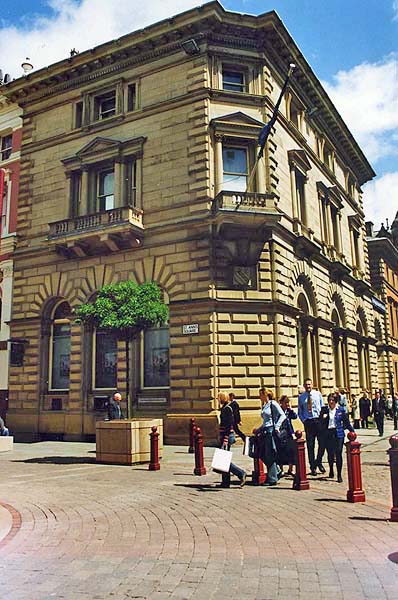
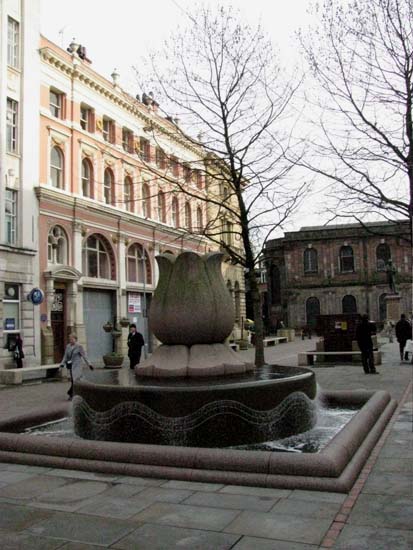
 Today the square
features the Royal Exchange at one end
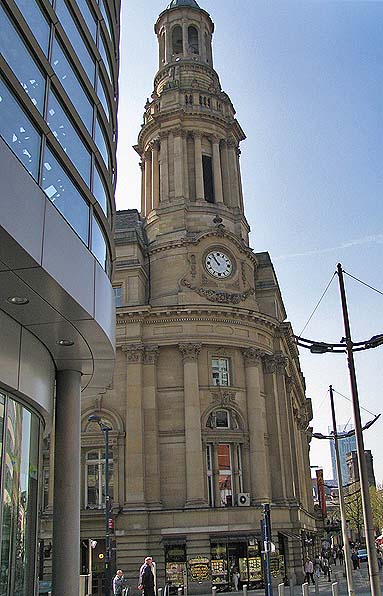 and St Ann's Church
at the other.
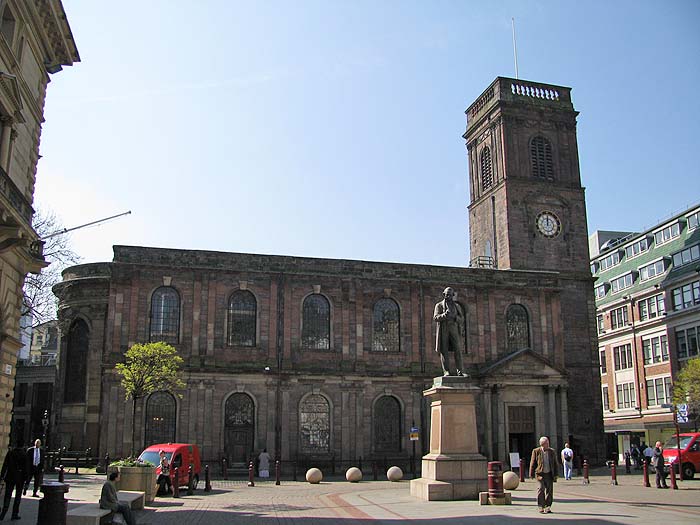 Between is a
predominently retail area.
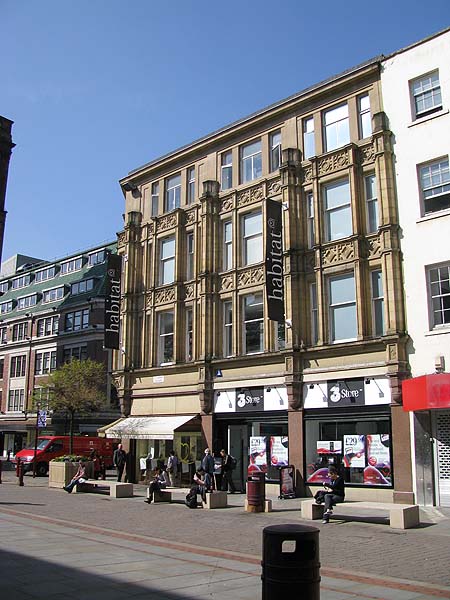 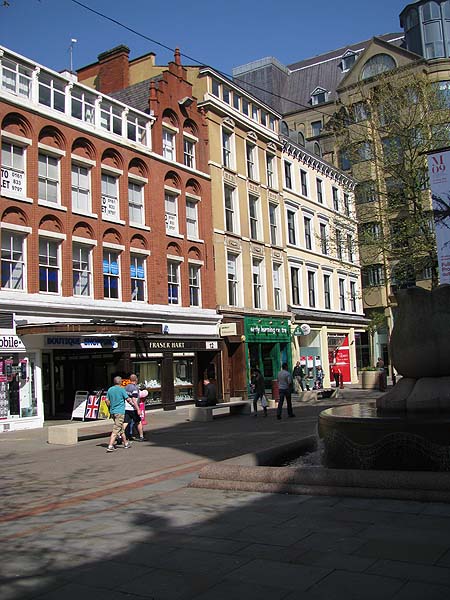 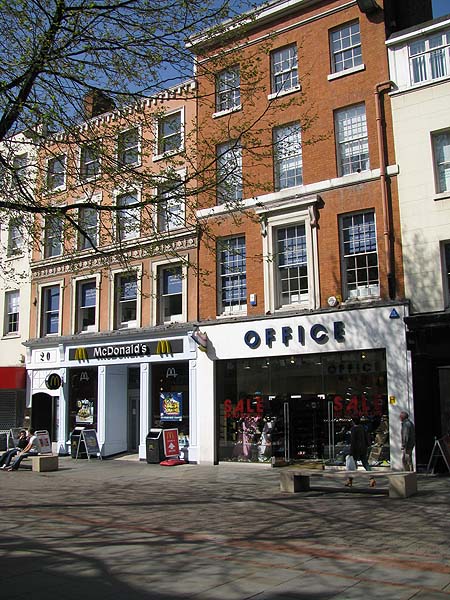 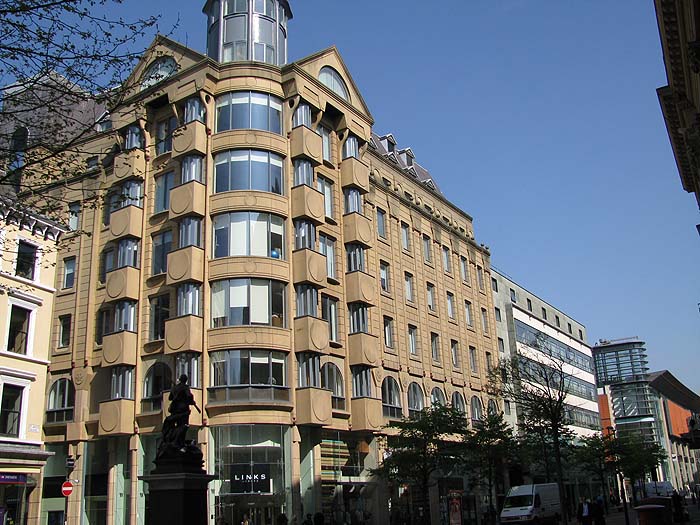 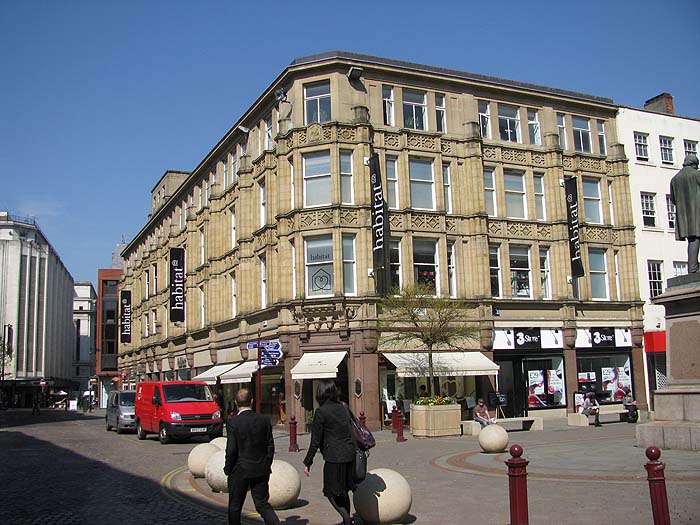 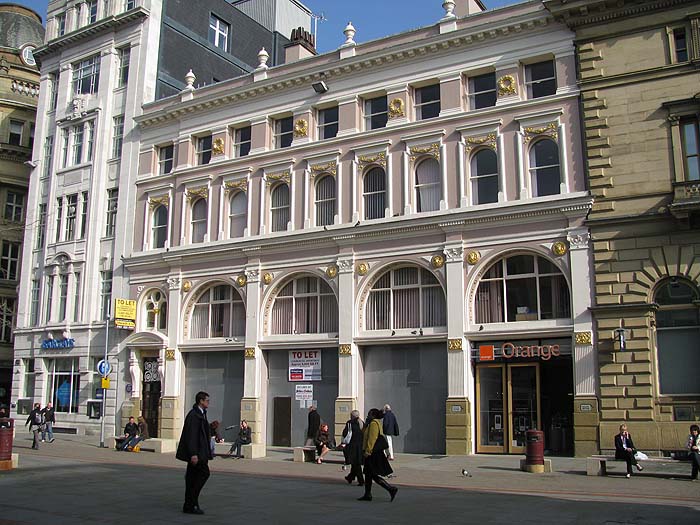  Each Christmas, in the last few years, it has hosted a German Christmas market. In the square you will
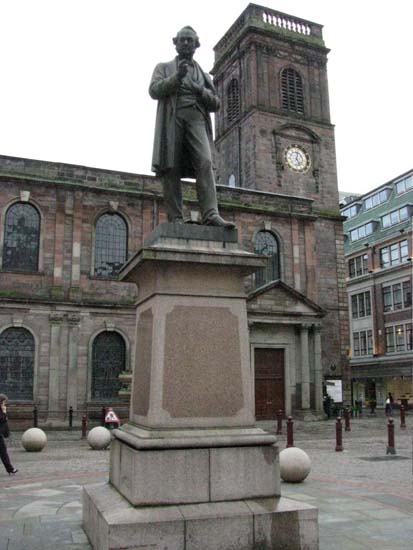
find a statue of Richard Cobden (June 3 ,1804 - April
2 ,1865 ). He was a British manufacturer and Radical
and Liberal statesman who, with John Bright, founded
of the Anti-Corn Law League . Cobden became a
conspicuous figure in Manchester political and
intellectual life. He was involved in the foundation
of the Manchester Athenaeum and he was the first to
address the members. He was a member of the chamber of
commerce and was part of the campaign for the
incorporation of the city becoming its first aldermen.
  Standing near the
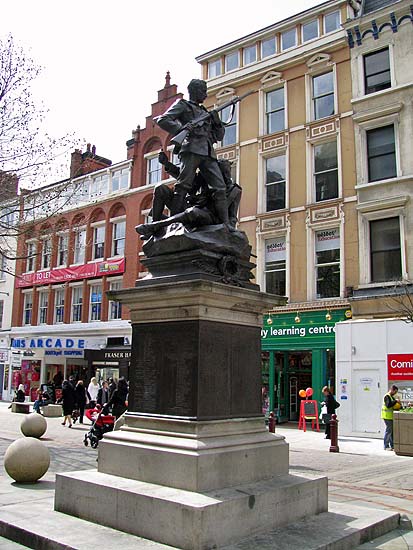
Market Street end of St Ann's Square is the Boer War
Memorial by Hamo Thorneycroft and erected in
1907. It depicts a British soldier protecting a
fallen comrade.
 Close Window |